
Cutting Keyways in Hardened Steel and Difficult Alloys
Cutting a keyway in mild steel is straightforward. Cutting the same keyway in 4140 pre-hard, 17-4 stainless, D2 tool steel, or Inconel is a different problem entirely — and the method that works on soft material often fails badly on hard material.
Standard HSS broaches start chipping above 35 HRC. By 40–42 HRC — common in heat-treated power transmission components, aerospace alloys, and tool steels — broach tool life collapses, crashes become a real risk, and EDM becomes the default fallback. EDM works, but it’s slow and expensive per part.
NMT keyseat millers are designed and cutter-spec’d to your specific material. We manufacture tooling for hard and difficult-to-machine alloys across industries where standard approaches have already been tried and failed.
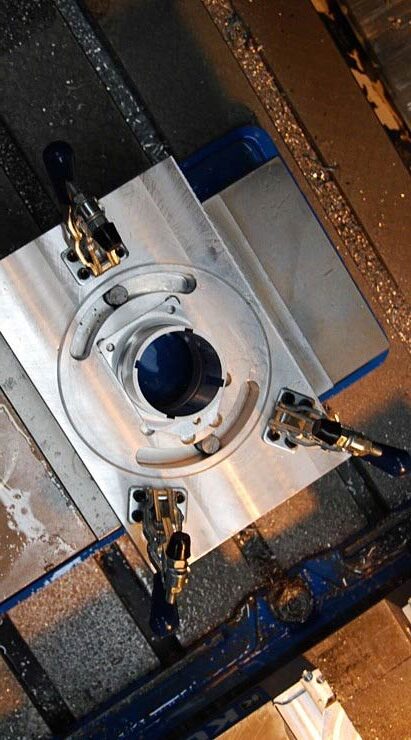
Why Hard Materials Create Keyway Problems
The challenge with hardened steel keyways isn’t just tool wear — it’s a cascade of problems that compounds as hardness increases:
Broaching above 35–40 HRC: Standard HSS broaches are rated for softer materials. As hardness climbs, chip formation changes — instead of shearing cleanly, hard material resists deformation, which drives cutting forces up and causes premature edge chipping. Above 40–42 HRC, even carbide CNC broach inserts have limited practical life, and the risk of crashes increases significantly. Machining forums and industry sources consistently report jammed and broken broaches, damaged tool bodies, and machines knocked out of alignment from hard material broaching attempts gone wrong.
The work hardening problem with stainless: Austenitic and precipitation-hardening stainless steels (304, 316, 17-4) work-harden rapidly during cutting. Each broach tooth passes through the work-hardened layer left by the previous tooth, accelerating wear and increasing the force required. A fresh, sharp broach in 316 stainless may work once — a slightly worn one can weld itself into the bore.
EDM as the only fallback: When broaching fails on hard materials, wire EDM is typically what engineers specify next. It cuts regardless of hardness since it doesn’t rely on mechanical cutting force. But EDM is slow — roughly 12 square inches per hour — and expensive per part. For anything beyond a true one-off, the economics are difficult to justify.
NMT keyseat millers in hard materials: The cutter geometry and material are specified for your application. In harder alloys, we design the cutter with appropriate geometry for the material’s characteristics — chip formation behavior, hardness, and any work hardening tendency — so the tool cuts rather than rubs or chips. The one-pass operation minimizes cutting time in hard materials, which directly reduces heat generation and tool wear compared to multi-pass approaches.
Materials NMT Keyseat Millers Have Cut Keyways In
Heat-treated alloy steels:
- 4140 pre-hard and heat-treated
- 4340 alloy steel
- 300M ultra-high-strength steel (common in aerospace landing gear)
- A2 and D2 tool steel
Stainless steels:
- 17-4 PH (H900, H1025, and other conditions)
- 316 and 316L stainless
- 304 stainless
- Duplex and super-duplex stainless
Nickel and high-temperature alloys:
- Inconel 625 and 718
- Monel
- Hastelloy
Titanium alloys:
- Ti-6Al-4V and other aerospace-grade titanium
Standard engineering steels (included for reference):
- 1018, 1045, 4140 annealed
- Bronze alloys (C932, C954)
- Aluminum alloys
If your material isn’t listed, contact us with the alloy and condition — we’ll confirm whether a keyseat miller is feasible for your application and what cutter geometry we’d specify.
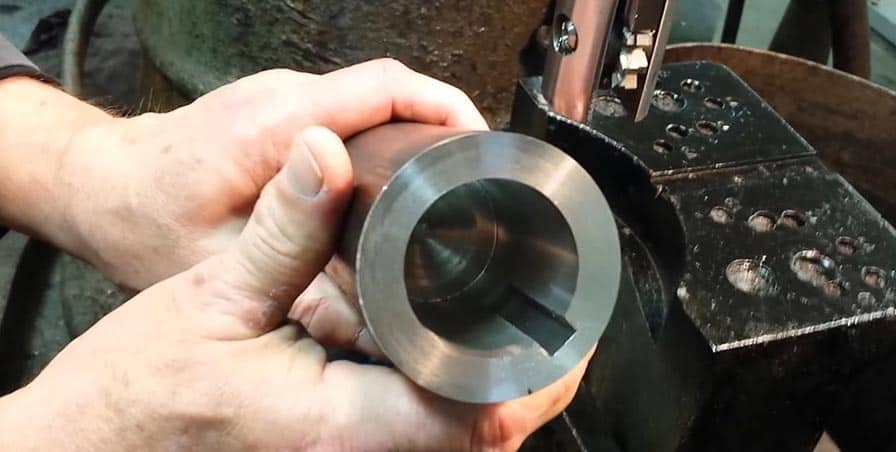
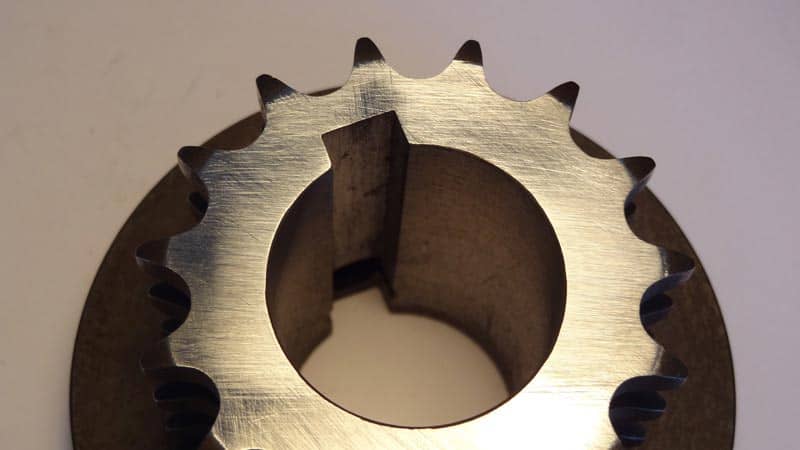
Hard Material Keyways: Where NMT Gets Called In
The pattern is consistent across industries: a shop or manufacturer tries broaching a hard material keyway, runs into tool failure or unacceptable tool life, and needs a different solution.
Heat-treated gear and coupling hubs — power transmission components that are heat-treated before the keyway is cut, either because the design sequence requires it or because a pre-machined keyway was damaged and needs to be reworked. Broaching at 40+ HRC is impractical; EDM is slow and expensive; NMT’s keyseat miller handles the application in one pass.
Aerospace and defense alloys — 300M landing gear components, 17-4 PH actuator hubs, titanium coupling bores. These materials are specified for their strength and corrosion resistance, not their machinability. The keyway has to happen after heat treatment, in the final material condition, and the part is too valuable to risk a broach crash.
Stainless steel pump and valve components — 316 stainless pump sleeves, duplex stainless valve bodies, and similar wetted components where corrosion resistance requires a difficult-to-machine alloy. The work hardening behavior of stainless under broaching is a well-documented problem; keyseat milling in one pass avoids the multi-tooth progressive loading that drives it.
Tool steel and die components — D2, A2, and similar tool steels at working hardness. These materials are at or beyond the practical limit of broaching; EDM is the standard approach but the per-part cost is high for any volume.
Rework and repair — restoring damaged keyways in hardened components where re-annealing, recutting, and re-hardening would be prohibitively expensive. The keyseat miller cuts in the existing hardened condition.
Capabilities for Hard Material Applications
All tooling is custom-manufactured to your application and material:
- Bore diameters: Under ½” to over 6″
- Keyslot widths: 1/16″ to 2½” (metric and imperial)
- Keyslot length: Up to 12″ — contact us for hard material applications, as length limits vary by alloy
- Tolerances: Within ±0.0002″ on width
- Blind bores: No relief hole required — same principle applies in hard materials
- Cutter specification: Selected for your specific alloy, condition, and hardness
- Machine compatibility: Manual drill press, manual mill, horizontal CNC, vertical CNC machining center
- Delivery: Custom tooling typically ships in 2–3 weeks
One important note: for materials above approximately 45 HRC, contact us before ordering. Feasibility depends on the specific alloy, hardness, bore geometry, and keyway dimensions. We’ll tell you directly whether a keyseat miller is the right tool for your application — and if EDM is genuinely the better answer for your specific case, we’ll say so.
Request a Quote for Your Hard Material Keyway
Have a keyway application in a hardened or difficult-to-machine alloy? The most useful information to send us:
- Material and condition (alloy designation, heat treat condition, approximate hardness if known)
- Bore diameter and keyway dimensions (width, depth, length)
- Blind or through bore
Call: 513-541-6682 Email: nationalmachinetoolco@gmail.com
National Machine Tool Co. — Cincinnati, OH — Over 100 years manufacturing custom keyseat millers, including the hard material applications other tooling can’t handle.