
Keyseat Miller for CNC Machining Centers
Your CNC machining center is already doing the hard work. The part is fixtured, centered, and ready. Then you hit a keyway — and suddenly the choices are: transfer the part to a separate machine, call a broaching house, burn it with EDM, or fight with an angle head that chatters and requires its own programming workaround.
There’s a cleaner option. National Machine Tool’s keyseat millers are designed to run directly in your CNC machining center — horizontal or vertical — as a standard tool in the carousel. No angle head required. No secondary setup. The keyway is milled in one pass and the part keeps moving.
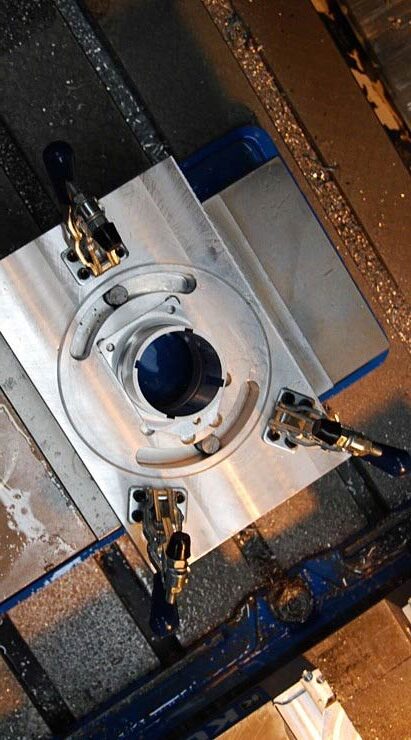
How It Works on a CNC Machine
The keyseat miller mounts in your spindle using a standard tool holder — the same way any other tool in your carousel does. When the program calls for the keyway operation, the tool loads, the spindle brings it to the bore, and the miller feeds in.
As the tool feeds axially into the bore, the bore wall itself acts as the guide for the cutter. The rotating cutter mills the keyway to full width and depth in a single pass. The tool then retracts, and the program continues. From the machine’s perspective, it’s just another tool change and a Z-axis move.
Setup is handled at the tooling design stage. NMT engineers the keyseat miller to your specific bore diameter and keyway dimensions, so there’s no on-machine adjustment required — the tool is correct for your application before it arrives.
Compatible with Horizontal and Vertical CNC Machining Centers
NMT keyseat millers are manufactured for both horizontal and vertical CNC configurations:
Vertical machining centers (VMC): The tool loads into the spindle in the standard vertical orientation. The keyseat miller feeds into bores oriented on the machine table — pump housings, motor flanges, coupling hubs, and similar parts are typical setups.
Horizontal machining centers (HMC): The tool loads and feeds horizontally into bores. HMC setups are common for larger bore applications and parts that are pallet-fixtured for high-volume production runs.
In both configurations, the tool requires no angle head, no special spindle attachment, and no deviation from standard toolchange procedures. If your CNC can hold a tool and move a Z-axis, it can run an NMT keyseat miller.
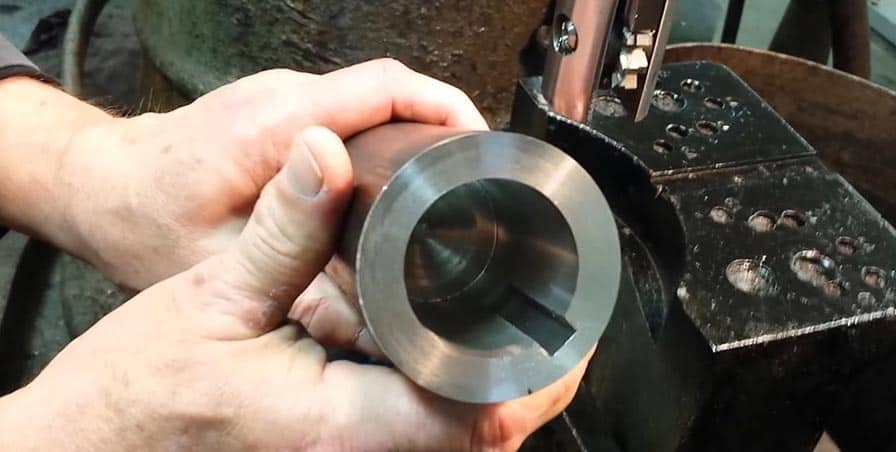
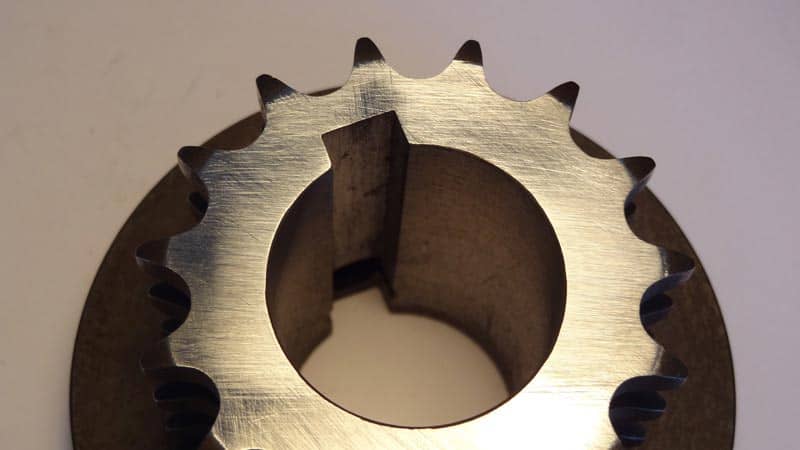
Why Not an Angle Head?
Angle heads are the most common alternative for internal keyway milling on a VMC. They work — but they come with limitations that add up quickly on production work:
- Chatter — angle heads redirect cutting forces 90° from the spindle axis, creating a bending moment on the housing and making vibration significantly harder to control than with a standard tool
- Chip evacuation — the head’s body restricts the cut zone, and chips have fewer paths out; packed chips increase heat, cutting force, and the risk of re-cutting the finished surface
- Duty cycle — most angle heads are rated for intermittent use; sustained keyway production runs can exceed their thermal and mechanical limits
- Setup and programming — angle heads often require separate offsets, feed rate adjustments, and operator attention that standard tool changes don’t
- Cost — quality angle heads run several thousand dollars and are single-purpose
The NMT keyseat miller bypasses all of this. It mounts like any other tool, cuts in a single pass, and doesn’t require any of the workarounds that angle head setups demand.
CNC Keyseat Miller Capabilities
All tooling is custom-manufactured to your application:
- Bore diameters: Under ½” to over 6″ (metric and imperial)
- Keyslot widths: 1/16″ to 2½”
- Keyslot length: Up to 12″ in most materials
- Keyway types: Full depth, two-step, parallel/opposite, V-shaped, radius arc, straight splines
- Blind bores: Full-depth keyways in blind bores with no relief hole required
- Tolerances: Within ±0.0002″ on width
- Materials: Steel, stainless, aluminum, bronze, titanium, cast iron, and most engineering alloys
- Delivery: Custom tooling typically ships in 2–3 weeks
We begin with a print of your application. Our engineers design the tooling to your bore and keyway dimensions and manufacture it for direct use on your CNC equipment.
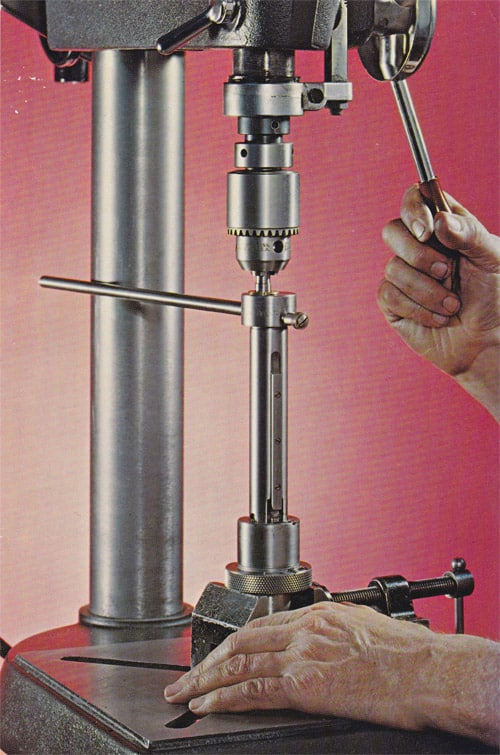

Common CNC Machining Center Applications
CNC shops bring NMT keyseat millers in-house most often for:
- Production keyway milling — consistent, repeatable keyways across high-volume runs without transferring parts to a second machine
- Blind bore applications — where broaching isn’t possible and EDM is too slow or expensive
- Complete-in-one-setup machining — keeping the part on the pallet or fixture through the full operation including the keyway
- Job shop applications — difficult or unusual keyway geometries that standard broaching tooling can’t handle
- Aerospace and precision work — tight-tolerance internal keyways where accuracy and repeatability matter more than cycle time
We also work directly with job shops that want to bring keyway operations in-house rather than outsourcing them. If you’re regularly sending parts out for keyway work, a custom keyseat miller often pays for itself quickly.
Bring Your Keyway Operation In-House
If keyways are currently a bottleneck — parts going out to broaching houses, EDM shops, or sitting on a second machine — a CNC-compatible keyseat miller eliminates the transfer entirely.
Start with your application dimensions. We quote custom tooling from a print or a sketch, and ship stock-size tools in 2–3 days.