
Keyseat Miller for Manual Machines — Mill Keyways on a Drill Press or Bridgeport
Not every shop has a CNC machining center. Not every keyway application needs one. NMT keyseat millers have been running on manual machines — drill presses, Bridgeport-style knee mills, radial arm drills, and similar equipment — for over 100 years, long before CNC was a consideration. The tool was designed to work with what machinists actually had in their shops, and that’s still how most NMT keyseat millers are used today.
If you have a drill press or a manual milling machine and you need to mill a precise internal keyway, this page is for you.
How the Keyseat Miller Works on a Manual Machine
The keyseat miller mounts in a standard drill chuck or collet — the same way a drill bit or end mill does. No special adapter, no spindle modification, no dedicated attachment required. If your machine has a spindle that accepts a round shank tool, it can run an NMT keyseat miller.
On a drill press: The tool mounts in the drill chuck. The part is fixtured on the table below — clamped in a V-block, a vise, or a custom fixture — with the bore oriented vertically under the spindle. The spindle is brought to speed (typically 350–1,900 RPM depending on the miller size and material), cutting oil is applied at the bore entry, and the quill is fed downward at a smooth, consistent rate. The bore wall guides the cutter — the tool self-aligns to the bore centerline as it enters. The keyway is milled to full depth in one pass. Retract the quill, stop the spindle, and the cut is done.
On a Bridgeport or knee mill: The tool mounts in a collet or chuck in the vertical spindle. The part is fixtured on the table with the bore oriented vertically. Operation is essentially the same as a drill press — the quill feeds the tool into the bore while the spindle rotates at the appropriate speed. The knee mill’s quill depth stop and DRO make it easier to control depth accurately compared to a drill press, which is an advantage for precision applications.
On a radial arm drill or floor-standing drill press: The radial arm gives flexibility to position the spindle over parts that might not fit under a bench drill press. Operation is the same. Useful for larger parts — conveyor pulleys, large pump housings, heavy couplings — that can’t be easily moved to a milling machine.
No CNC programming. No carousel. No G-code. The machinist controls the feed with the quill handle, monitors the cut by feel and sound, and stops at depth.
What You Need to Run an NMT Keyseat Miller on a Manual Machine
The barrier to entry is genuinely low. To run an NMT keyseat miller on a manual machine you need:
A machine with a rotating spindle that accepts a round shank tool. Drill press, knee mill, radial arm drill, floor-standing drill press — any of these work. The tool shank is sized to fit standard drill chucks and collets.
Variable speed control or a spindle speed in the right range. Most NMT keyseat millers run between 350 and 1,900 RPM depending on size and material. A drill press with a belt-and-pulley speed selector or a variable-speed head covers this range. A Bridgeport with its variable-speed head definitely covers it. Check the feeds and speeds chart for your specific miller model and material.
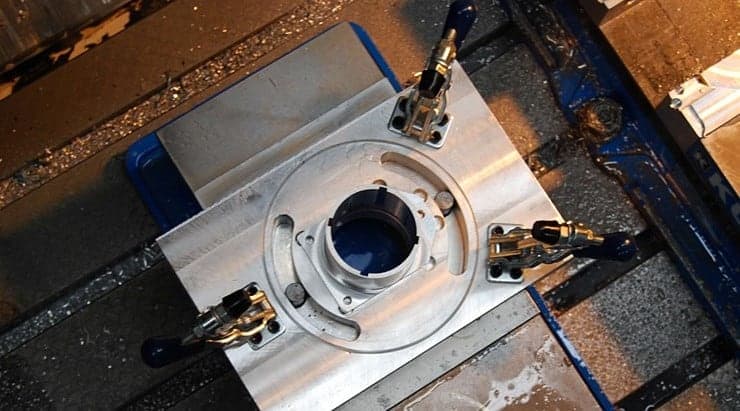
A fixture to hold the part. The part must be clamped so it can’t rotate during the cut — cutting torque will try to spin it. For round parts a V-block with a clamp works well. For flanged or flat-sided parts, a milling vise. For complex shapes, a simple custom plate or block drilled to locate the bore. The fixture doesn’t need to be fancy — it needs to prevent rotation and keep the bore vertical under the spindle.
Cutting oil for steel and hard alloys. Apply at the bore entry before starting the cut. Cast iron runs dry. Aluminum can be run with cutting oil or WD-40 as a lubricant.
That’s it. No coolant system, no tool presetter, no CAM software, no controller. A machinist who can run a drill press can run an NMT keyseat miller.
Manual Machine Keyway Applications
The majority of NMT keyseat miller applications that run on manual machines are:
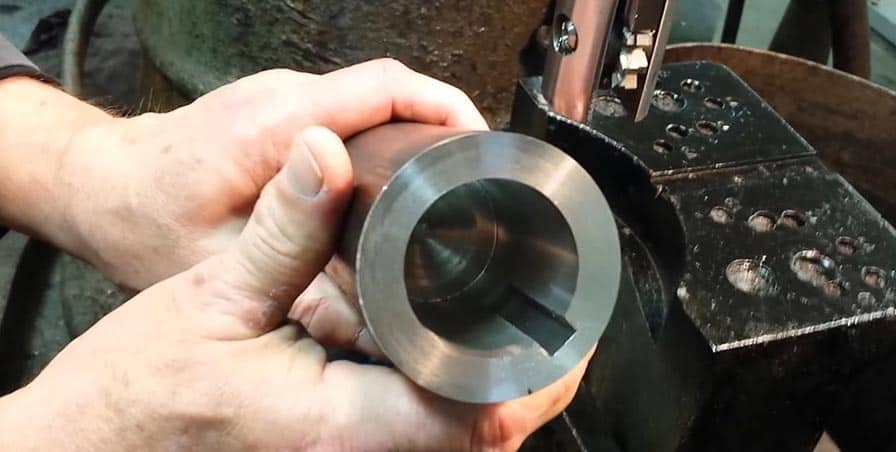
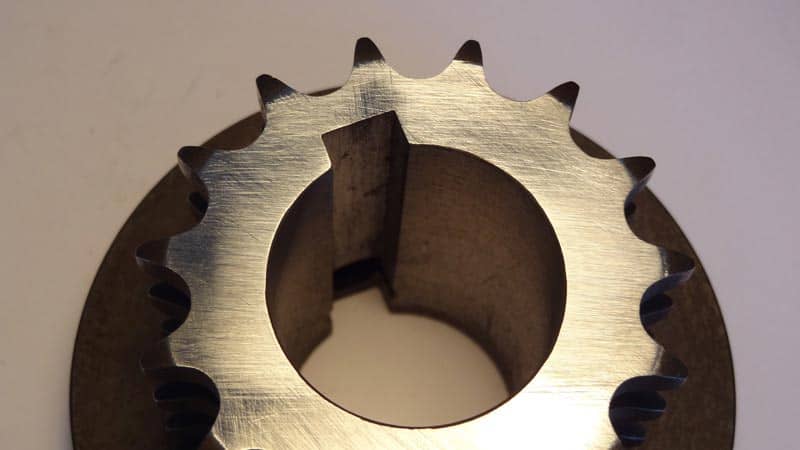
Job shop and maintenance work — one-off and short-run keyway jobs that come across a manual machine shop’s workload. A replacement coupling hub, a modified sprocket bore, a pump sleeve keyway, a custom shaft adapter. These are the everyday applications that keep manual machine shops busy and that the keyseat miller handles cleanly without a CNC.
Repair and rework — restoring damaged keyways, cutting oversized replacement keyways in repaired components, or cutting new keyways in salvaged hubs and couplings. Manual machine work, done with the tool that fits the application.
Blind bores without a relief hole — the blind bore advantage applies equally on manual machines. A machinist with a drill press and an NMT keyseat miller can cut a clean, full-depth keyway in a blind bore that a broach simply can’t access. No CNC required for that capability.
Small shops that can’t justify CNC investment — a custom keyseat miller for a specific application costs a fraction of what CNC equipment costs. For a shop that does periodic keyway work on a manual machine, it’s the right level of tooling investment.
Field and on-site work — portable drill presses and magnetic drill setups can run smaller NMT keyseat millers for on-site keyway work on installed equipment. For large, heavy components that can’t be moved to a machine shop — large pump installations, installed conveyor drives, in-place gearboxes — this is sometimes the only practical approach.
Prototyping and development — engineers and prototype shops using manual machines for development work encounter keyway applications regularly. The keyseat miller gives them clean, accurate keyways without sending parts out.
Manual vs. CNC — Same Tool, Same Results
The same NMT keyseat miller that a machinist runs on a drill press can be loaded in a CNC carousel and run from a program. The tool doesn’t change — the machine changes. This matters for a few reasons:
If your shop currently runs keyway work on a manual machine and is considering CNC investment, the NMT keyseat miller tooling you already have will work on your future CNC. No need to re-tool.
If a part is too large or awkward to set up on a CNC but your manual machine can handle it, the keyseat miller gives you the same keyway quality on the manual machine that CNC would produce.
The limiting factor on a manual machine versus CNC is consistency across a long production run — a CNC maintains consistent feed rate and depth more reliably over many parts than a manual quill feed. For one-off and short-run work, the manual machine produces results that are indistinguishable from CNC in terms of keyway quality.
Capabilities
All tooling is custom-manufactured to your application:
- Bore diameters: Under ½” to over 6″ (metric and imperial)
- Keyslot widths: 1/16″ to 2½”
- Keyslot length: Up to 12″ in most materials
- Tolerances: Within ±0.0002″ on width
- Keyway types: Full depth, blind bore (no relief hole), through bore, parallel/opposite
- Materials: Steel, stainless, aluminum, bronze, cast iron, titanium, and most engineering alloys
- Machine compatibility: Drill press, knee mill, radial arm drill, floor-standing drill press, and CNC machining centers
- Delivery: Stock tooling ships in 2–3 days; custom tooling in 2–3 weeks
Request a Quote
Have a keyway application on a manual machine? Tell us your bore diameter, keyway dimensions, material, and machine type (drill press, knee mill, etc.). We’ll quote custom tooling and confirm it’s the right fit for your setup.
Call: 513-541-6682 Email: nationalmachinetoolco@gmail.com
National Machine Tool Co. — Cincinnati, OH — Over 100 years manufacturing keyseat millers for manual machines and CNC equipment alike.