
Keyseat Milling vs Broaching vs EDM for Internal Keyways
When machining internal keyways, choosing the right method has a direct impact on accuracy, cost, lead time, and design flexibility. While broaching, EDM, and keyseat milling are all commonly used, each process has clear strengths and limitations depending on the application.
This guide provides a detailed comparison of keyseat milling vs broaching vs EDM to help engineers, machinists, and manufacturers determine the best method for their internal keyway requirements.
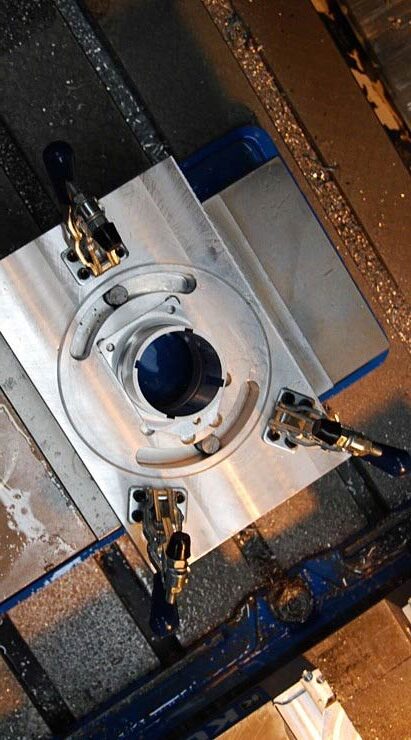
Overview of Internal Keyway Machining Methods
Internal keyways are machined to lock rotating components together and transmit torque reliably. The machining method selected depends on factors such as:
Blind vs through bores
Material hardness
Tolerance requirements
Production volume
Tooling cost and flexibility
The three most common approaches are broaching, EDM, and keyseat milling. Understanding how each works — and when each should be used — is critical for successful part design and manufacturing.
Keyseat Milling Explained
Keyseat milling is a mechanical cutting process that removes material incrementally using a keyseat cutter. Unlike broaching, it does not require a through-hole and does not rely on a single, fixed-profile tool.
How Keyseat Milling Works
A cutter progressively machines the keyway to final depth
Cutting forces are controlled and adjustable
The process can be performed on both CNC and manual machines
Advantages of Keyseat Milling
Excellent for blind bore keyways
Lower tooling investment than broaching
High dimensional control and repeatability
Flexible for varying keyway sizes and profiles
Ideal for low to medium production volumes
Limitations
Slightly longer cycle times than broaching in high-volume production
Requires proper setup and operator control for optimal results
Keyseat milling is widely used when flexibility, accuracy, and cost control are more important than raw production speed.
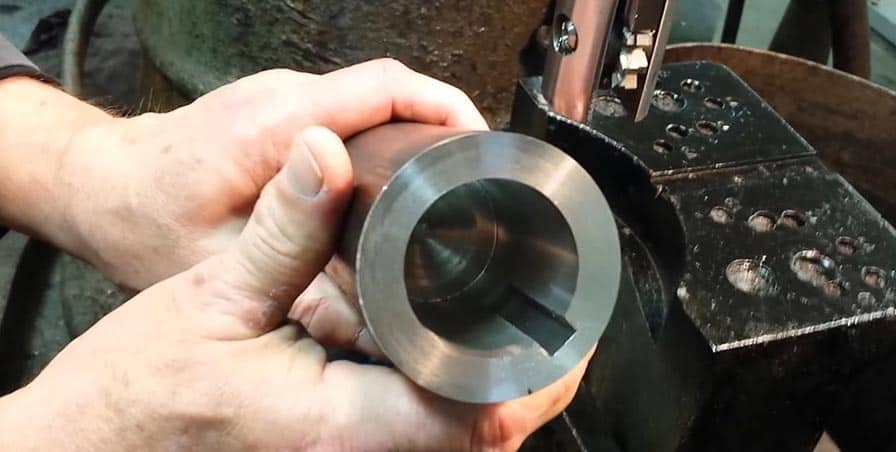
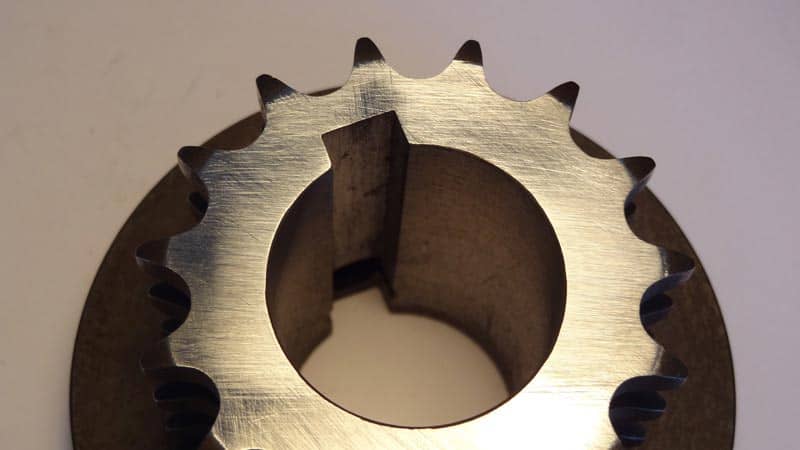
Internal Keyway Broaching Explained
Broaching is a traditional method commonly used in high-volume manufacturing environments.
How Broaching Works
A broach tool with progressively deeper teeth is pushed or pulled through a bore
The entire keyway profile is formed in a single pass
Advantages of Broaching
Fast cycle times
Excellent surface finish
High consistency in large production runs
Limitations
Not suitable for blind bores
High initial tooling cost
Limited flexibility once tooling is made
Design changes often require new broaches
Broaching is best suited for through-hole keyways where part geometry and volume justify the tooling investment.
EDM (Electrical Discharge Machining) Explained
EDM removes material through controlled electrical discharges rather than mechanical cutting.
How EDM Works
An electrode erodes material via spark discharges
No direct cutting forces are applied to the part
Advantages of EDM
Excellent for hardened or exotic materials
Highly accurate for complex profiles
Suitable for blind bore keyways
Limitations
Slower material removal rates
Higher operating and equipment costs
Potential heat-affected zones
Less efficient for standard production work
EDM is typically chosen when material hardness or geometry prevents traditional machining methods.
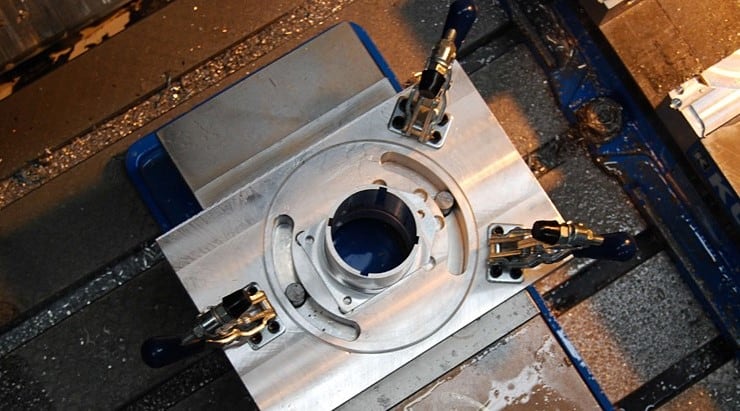
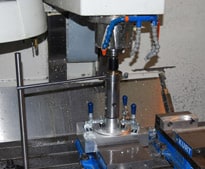
Comparison: Keyseat Milling vs Broaching vs EDM
Feature | Keyseat Milling | Broaching | EDM |
|---|---|---|---|
Blind Bore Capability | ✅ Yes | ❌ No | ✅ Yes |
Accuracy | High | High | Very High |
Tooling Cost | Low–Medium | High | High |
Flexibility | Very High | Low | Medium |
Production Speed | Medium | Very Fast | Slow |
Best Use Case | Custom & blind bores | High-volume through holes | Hard materials & complex shapes |
Which Internal Keyway Machining Method Is Best?
There is no single “best” method for all applications. The right choice depends on your specific requirements:
Choose keyseat milling when flexibility, blind bore capability, and cost control are important.
Choose broaching when producing large volumes of identical parts with through-holes.
Choose EDM when working with hardened materials or complex geometries that cannot be machined mechanically.
In many modern manufacturing environments, keyseat milling provides the best balance between precision, adaptability, and tooling investment.

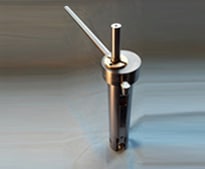
Why Keyseat Milling Is Often the Preferred Solution
For many manufacturers, keyseat milling offers advantages that other methods cannot match:
Machining internal keyways in blind holes
Accommodating design changes without new tooling
Maintaining tight tolerances with controlled cutting forces
Reducing lead times for custom or short-run parts
Because material is removed incrementally, machinists retain full control over the process, making keyseat milling especially valuable for precision-driven applications.
Final Considerations
Selecting the right internal keyway machining method early in the design process helps avoid unnecessary cost, delays, and production issues. Understanding the strengths and limitations of keyseat milling vs broaching vs EDM allows engineers and manufacturers to choose the most efficient and reliable solution for their application.
For a complete overview of how internal keyways are machined and when each method is used, see our detailed guide on how internal keyways are machined.
Request a Quote for Keyway Milling
If you need keyway milling or internal keyseating, Keyseaters is ready to support your project.
Request a quote today.