
Keyway Milling for Material Handling — Conveyor Pulleys, Drive Components, and Handling Equipment
Material handling systems are built around rotating components — conveyor pulleys, drive sprockets, idler shafts, reducer output hubs, and roller assemblies — and nearly all of them depend on precise internal keyways to lock hubs to shafts and transmit torque reliably. When those keyways are in blind bores, non-standard dimensions, or on replacement parts where lead time matters, standard broaching creates problems that NMT’s keyseat millers solve directly.
We manufacture custom keyseat millers for material handling keyway applications — conveyor systems, warehouse automation, overhead cranes, bucket elevators, screw conveyors, and similar equipment — wherever an internal keyway needs to be cut precisely and without the constraints that broaching imposes.
Where Keyways Appear in Material Handling Systems
Internal keyways appear throughout material handling equipment at every shaft-to-hub connection:
Conveyor pulleys — drive pulleys and tail pulleys are the most common keyway application in conveyor systems. The pulley hub bore is keyed to the head shaft, and the keyway must be accurate to prevent slipping under the tension and torque loads of a loaded conveyor. Replacement pulleys — particularly those sourced from non-OEM suppliers or manufactured in-house — frequently require custom keyway cutting in non-standard bore sizes.
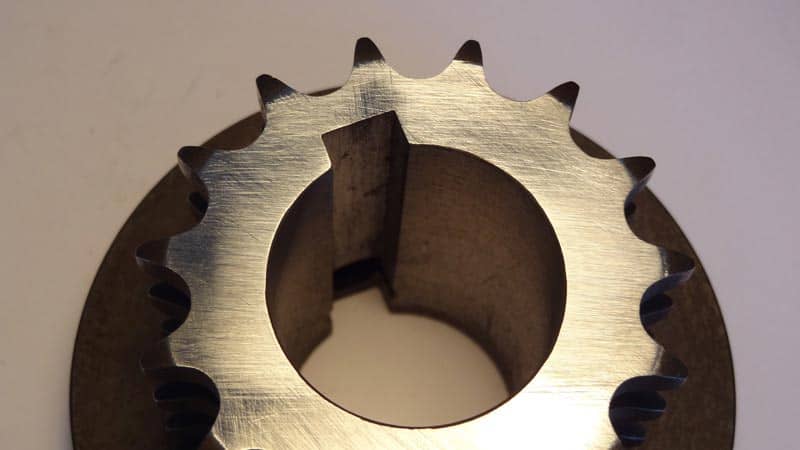
Drive sprockets and chain drives — roller chain drive sprockets on conveyor drives, bucket elevator drives, and similar equipment are keyed to drive shafts. When sprockets are replaced or upgraded for a different chain pitch or bore size, the keyway often needs to be cut to a dimension that doesn’t match standard broach inventory.
Gearbox and reducer output hubs — inline and right-angle gear reducers in conveyor drive systems have keyed output bores that connect to the conveyor drive shaft. Replacement hubs and custom bore adaptations require internal keyways in what are typically blind bores.
Idler shaft and roller assemblies — in heavy-duty conveyor systems, keyed idler shafts and roller assemblies require internal keyways in components that are frequently replaced under wear. Having in-house keyway tooling eliminates the outsourcing dependency for high-turnover replacement parts.
Elevator and hoist drum hubs — overhead crane drums, hoist sheave hubs, and elevator drive components are keyed to their shafts. These are typically heavy-walled blind bores where broaching would require a relief feature that compromises the hub’s load-bearing wall thickness.
Screw conveyor coupling hubs — screw conveyor systems use coupling hubs at every section joint. These hubs are frequently blind bores with non-standard keyway dimensions that match a specific shaft and key specification rather than a standard broach size.
Fan and blower hubs in pneumatic conveying — pneumatic conveying systems use high-speed fan and blower assemblies where keyway accuracy directly affects balance and vibration at operating speed. Off-center or oversized keyways in fan hubs cause vibration that damages bearings and shortens service life.
The Material Handling Keyway Challenge
Material handling systems create a specific set of keyway machining challenges that push standard broaching toward its limits:
High replacement part volume with variable dimensions — conveyor systems wear out components. Pulleys, sprockets, and hubs are replaced regularly, and the replacement parts don’t always match the exact bore and keyway dimensions of OEM tooling inventory. Off-the-shelf broaches cover standard sizes — anything outside those standards requires either a custom broach (expensive and slow) or an alternative method.
Blind bores in heavy-duty hubs — heavy conveyor pulleys, elevator drums, and reducer hubs are thick-walled for load capacity. Those thick walls mean the bore terminates well inside the hub — a blind bore — where a standard broach has no exit path without a relief feature that would reduce wall thickness in exactly the area designed to carry load.
Short runs and one-off replacements — material handling maintenance and repair work rarely involves production quantities. A single replacement pulley, a modified sprocket bore for a drive change, or a custom shaft adapter for a system upgrade — these are one-off applications where custom broach economics don’t make sense. A custom keyseat miller is the right tool for the job.
In-house machining without a broach press — many maintenance shops and fabrication facilities that support material handling operations don’t have dedicated broaching equipment. Their drill press or milling machine is their machining capability. NMT keyseat millers run on exactly that equipment.
Repair and rework in the field — worn or damaged keyways in material handling components often need to be reworked or oversized. Keyseat milling can cut an oversized keyway in a repaired hub, or clean up a damaged keyway to the next larger standard size.
How Keyseat Milling Solves Material Handling Keyway Applications
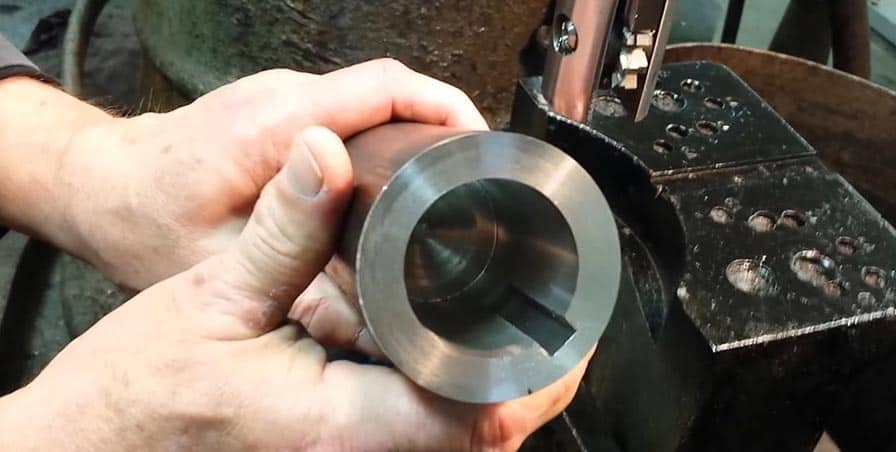
NMT’s keyseat millers are custom-manufactured to your specific bore diameter and keyway dimensions. The tool seats inside the bore using the bore wall as its guide, and a rotating cutter mills the keyway to full width and depth in a single pass.
For material handling applications specifically:
No relief hole in blind bore pulleys and hubs — the keyseat miller mills full-depth keyways in blind bores without a relief groove, cross-hole, or undercut. Hub wall thickness is preserved. No part modification required.
Any bore diameter and keyway size — bore diameters from under ½” to over 6″, keyslot widths from 1/16″ to 2½”, metric and imperial. If your replacement part has a non-standard bore and keyway combination, we manufacture tooling to match.
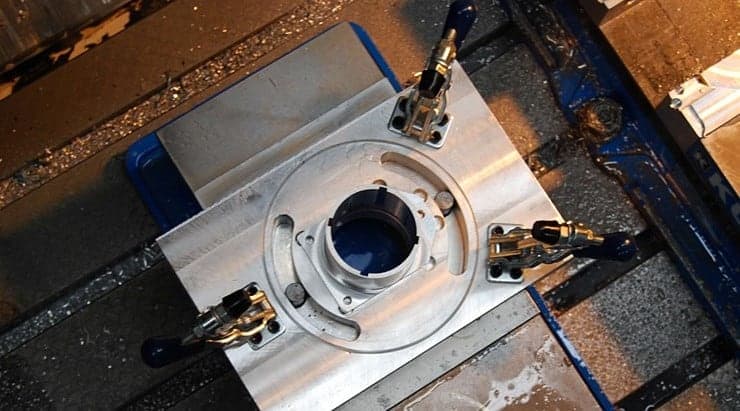
Works on the equipment your shop already has — manual drill press, manual mill, horizontal CNC, vertical CNC machining center. No broach press required. Maintenance shops, fabrication facilities, and equipment manufacturers all run NMT keyseat millers on their existing equipment.
Ships in 2–3 weeks — for custom tooling to a non-standard dimension. Stock-size tools ship in 2–3 days. For maintenance operations where keyway work comes up regularly, having the right tooling on hand eliminates the wait.
Capabilities for Material Handling Applications
All tooling is custom-manufactured to your application:
- Bore diameters: Under ½” to over 6″ (metric and imperial)
- Keyslot widths: 1/16″ to 2½”
- Keyslot length: Up to 12″ in most materials
- Tolerances: Within ±0.0002″ on width
- Keyway types: Full depth, blind bore (no relief hole), through bore, parallel/opposite
- Materials: Mild steel, 4140, stainless steel, cast iron, aluminum, bronze, and most material handling component alloys
- Machine compatibility: Manual drill press, manual mill, horizontal CNC, vertical CNC machining center
- Delivery: Stock tooling ships in 2–3 days; custom tooling in 2–3 weeks
Who Uses NMT Keyseat Millers for Material Handling
Conveyor system manufacturers building drive pulleys, head pulleys, and conveyor assemblies in-house use NMT keyseat millers as a production tool — loaded in the CNC carousel or run on a drill press, cutting keyways in pulley bores without transferring parts to a secondary machine.
Maintenance and repair shops supporting material handling operations use them for replacement pulley keyways, modified sprocket bores, and custom hub adaptations that come up in repair work — applications too varied for standard broach inventory to cover.
Equipment fabricators building custom material handling systems — conveyor frames, elevator assemblies, custom drive trains — use NMT tooling for the keyway work on non-standard components that don’t match catalog dimensions.
OEM replacement part suppliers manufacturing aftermarket conveyor pulleys, sprockets, and drive components for material handling equipment use NMT keyseat millers to cut keyways in replacement parts that must match OEM bore and keyway specifications without OEM tooling support.
Request a Quote
Have a conveyor pulley, drive sprocket, or material handling hub keyway application? Start with your bore diameter, keyway dimensions, material, and whether the bore is blind or through. We’ll quote custom tooling and confirm lead time from there.
Call: 513-541-6682 Email: nationalmachinetoolco@gmail.com
National Machine Tool Co. — Cincinnati, OH — Over 100 years manufacturing custom keyseat millers for the applications standard broaching can’t handle.