
Keyway Milling for Pump Impellers — Internal Keyways in Impeller Hubs
The keyway in a pump impeller hub is a small feature carrying a critical job: locking the impeller to the shaft so it transmits torque cleanly, runs true, and stays balanced at operating speed. Get it wrong and the consequences show up fast — imbalance, vibration, key fretting, and premature bearing wear. Cut it in the wrong place, or oversized, on a near-finished impeller and you’ve scrapped an expensive part.
Impeller hubs are also one of the harder keyway applications in the pump industry: the bore is frequently blind, the hub wall is often thin, and the material is commonly bronze or stainless. NMT manufactures custom keyseat millers built specifically for these conditions — milling a full-depth internal keyway in one pass, in a blind bore, without a relief hole and without modifying the part.
Why Impeller Keyways Are Difficult
Impeller hubs present a combination of constraints that push standard keyway methods to their limits:
Blind bores are the norm. Most impeller hubs are closed at one end — the bore terminates inside the hub and the keyway must stop cleanly without breaking through. A push or pull broach needs a relief feature at the end of the cut, which an impeller hub usually doesn’t have room for and can’t accept by design. Keyseat milling cuts to full depth in a blind bore with no relief feature required.
Thin hub walls. Impeller hubs are often designed with minimal wall thickness to keep mass and inertia low and to fit within the pump casing. Drilling a relief hole or cross-hole to enable broaching would compromise wall thickness in exactly the area that needs to carry the key load. The NMT keyseat miller requires no such modification.
Balance is critical. An impeller spins at operating speed inside a pump. A keyway that’s off-center or incorrectly dimensioned introduces imbalance, which at speed becomes vibration that damages seals and bearings and shortens service life. Keyway accuracy directly affects how well the impeller balances. NMT tooling holds keyslot width within ±0.0002″.
Difficult materials. Pump impellers are commonly bronze, 316 stainless, duplex stainless, or other corrosion-resistant alloys chosen for the fluid they move — not for machinability. Bronze is one of NMT’s most common impeller materials; stainless work-hardens and is tough on broach tooling. The keyseat miller’s cutter geometry is specified for the specific impeller alloy.
High value at the keyway stage. By the time an impeller reaches the keyway operation, it has significant machined value — casting, turning, boring, balancing. A failed keyway operation on a near-finished impeller is an expensive scrap. The single-pass, bore-guided keyseat miller minimizes that risk.
How the Keyseat Miller Works on an Impeller Hub
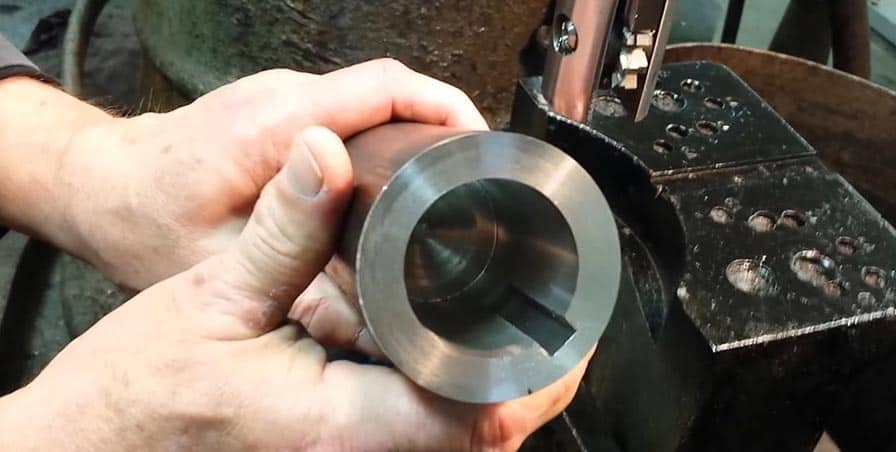
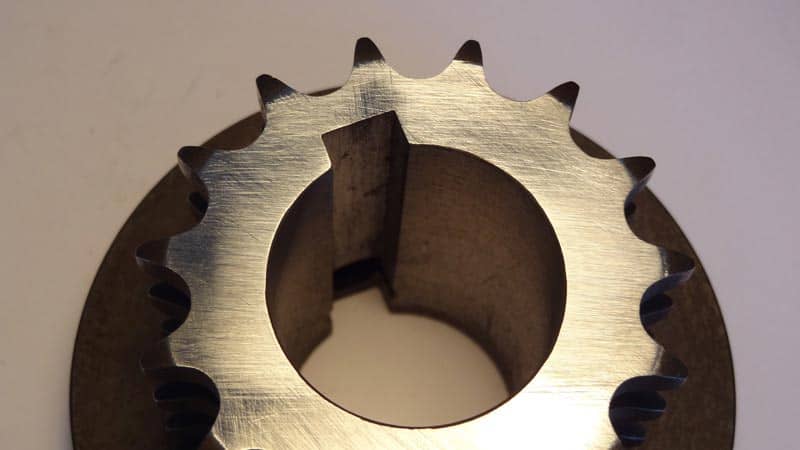
The tool is custom-manufactured to your impeller bore diameter and keyway dimensions. It mounts in a standard drill chuck, collet, or CNC tool holder and feeds axially into the hub bore. The bore wall guides the cutter on centerline, and the rotating cutter mills the keyway to full width and depth in a single pass — terminating cleanly inside a blind bore, then retracting.
No guide bushing, no external fixture, no relief feature, no part modification. The keyway is located accurately because the bore itself guides the tool, not because of machine precision or setup skill.
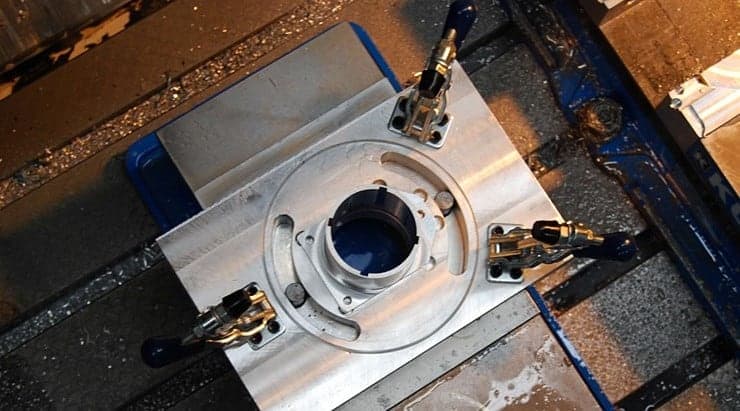
This works on a manual drill press, a knee mill, or a CNC machining center — so impeller manufacturers, pump rebuilders, and job shops can all run the tooling on whatever equipment they have.
Impeller Keyway Applications
NMT keyseat millers are used for impeller keyways across the pump and rotating equipment industry:
- Centrifugal pump impellers — the most common application; bronze and stainless impeller hubs keyed to pump shafts
- Multistage pump impellers — multiple impellers on a single shaft, each requiring an accurately located keyway for balance and alignment
- Vertical turbine pump impellers — deep-well and vertical turbine assemblies with keyed impeller connections
- Slurry and process pump impellers — heavy-duty impellers in abrasive and corrosive service, often in duplex stainless or specialty alloys
- Compressor and turbine rotors — rotating assemblies beyond pumps where the same blind-bore, balance-critical keyway challenge applies
- Impeller repair and replacement — re-cutting keyways in rebuilt impellers, or cutting keyways in replacement impellers that must match an existing shaft and key
Capabilities for Impeller Applications
All tooling is custom-manufactured to your application:
- Bore diameters: Under ½” to over 6″ (metric and imperial)
- Keyslot widths: 1/16″ to 2½”
- Keyslot length: Up to 12″ in most materials
- Tolerances: Within ±0.0002″ on width
- Blind bores: Full-depth keyways with no relief hole required
- Materials: Bronze (C932, C954), 316 and duplex stainless, carbon steel, aluminum, and most impeller alloys
- Machine compatibility: Manual drill press, manual mill, horizontal CNC, vertical CNC machining center
- Delivery: Stock tooling ships in 2–3 days; custom tooling in 2–3 weeks
Request a Quote
Have an impeller keyway application? Send us the bore diameter, keyway width and depth, impeller material, and whether the bore is blind or through. We’ll confirm feasibility and quote custom tooling.
Call: 513-541-6682 Email: nationalmachinetoolco@gmail.com
National Machine Tool Co. — Cincinnati, OH — Over 100 years manufacturing custom keyseat millers for the pump industry.