
Keyway vs. Keyseat — What’s the Difference?
The terms keyway and keyseat are used interchangeably in most shops and on most engineering drawings. Technically they’re not the same thing — but the distinction is subtle enough that even experienced machinists often use both terms for the same feature without causing problems. This page explains the precise difference, when it actually matters, and how each feature is machined.
The Short Answer
Keyseat — the slot machined into the shaft (external surface).
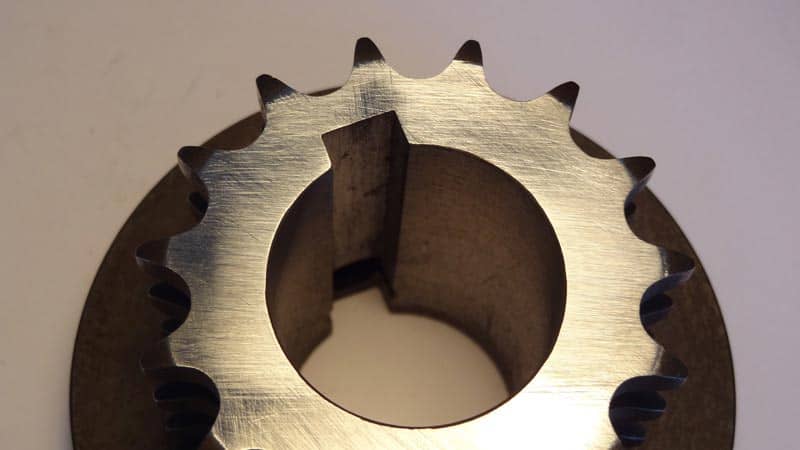
Keyway — the slot machined into the bore of the hub, gear, coupling, or other mating component (internal feature).
Both slots together accept the same key — the rectangular piece of metal that locks the two components together and transmits torque between them. The key sits half in the keyseat (on the shaft) and half in the keyway (in the bore), which is what prevents the hub from rotating independently of the shaft.
In common usage — including on engineering drawings, in vendor conversations, and in this website — the term “keyway” is often used for both features. If a print says “cut keyway,” it usually means whatever slot is being called out on that view. The technical distinction matters most when you’re specifying machining operations for both mating parts simultaneously and need to be clear about which one you’re referring to.
The Full Definitions
Keyway (Internal — in the Bore)
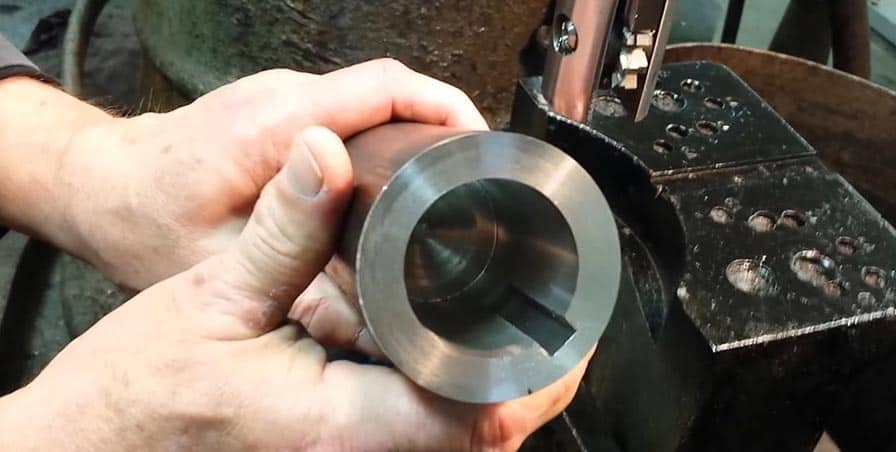
A keyway is a longitudinal slot machined inside the bore of a hub, gear, pulley, sprocket, coupling, or similar component. It is an internal feature — the tool must enter the bore to machine it — which is what makes keyways the more technically challenging of the two to cut.
Keyways are defined by:
- Width — the dimension across the slot, matching the key width
- Depth — how far the slot extends radially into the bore wall
- Length — how far the slot extends axially into the bore
- Position — angular location within the bore (critical for indexed assemblies with multiple keyways)
Tolerances on internal keyways are typically held tight — ±0.0002″ on width is standard for precision applications — because any looseness between the key and keyway allows the key to rock under cyclic torque loading, which accelerates fretting wear and eventually wallows out the slot.
Keyseat (External — on the Shaft)
A keyseat is a longitudinal slot machined into the surface of a shaft. It is an external feature, machined with a standard end mill, keyseat cutter, or Woodruff cutter running alongside the shaft. Because the tool has open access to the shaft surface, machining a keyseat is significantly simpler than machining an internal keyway.
Keyseats are also defined by width, depth, length, and position — the same dimensions, but on the external shaft geometry. Depth is measured from the shaft surface down to the bottom of the slot. Width matches the key width, same as the internal keyway.
The shaft keyseat is typically machined to a slightly tighter tolerance than the hub keyway, because the key is press-fit or lightly driven into the shaft keyseat and should have no play on the shaft side. The hub keyway is typically a clearance or transition fit to allow assembly.
How Keyway Fits Are Specified
Key and keyway fits follow standardized dimensions based on shaft diameter. The most common standards in the United States are ANSI B17.1 (inch) and ANSI B17.2 (Woodruff keys). Metric applications typically follow DIN 6885 or ISO 773.
For a given shaft diameter, the standard specifies the key width, key height, shaft keyseat depth, and hub keyway depth. The fit between key and keyway has three standard classes:
Class 1 — Free fit: Clearance on both sides of the key. Used for easy assembly and disassembly where backlash is acceptable. Typical for manually positioned components.
Class 2 — Normal fit (most common): Slight clearance on key width to hub keyway. Key is press-fit to shaft keyseat. Standard for most industrial power transmission applications — gears, couplings, pulleys.
Class 3 — Close or tight fit: Transition fit between key and both keyway and keyseat. Used in high-precision or reversing load applications where any backlash would cause problems.
The practical implication for machining: holding the width tolerance on the internal keyway is the critical dimension. A keyway that’s 0.001″ oversize on width will have play under load; 0.002″ oversize and the key will begin to rock.
How Each Is Machined
Machining a Keyseat (External Shaft)
Shaft keyseats are machined with:
End mills: A standard end mill plunged and fed along the shaft axis. Common for open-ended keyseats. Quick, flexible, and works on any milling machine.
Keyseat cutters (straddle cutters): A disc-type cutter that straddles the shaft and mills the keyseat in one pass. Produces a flat-bottomed keyseat with accurate width in a single operation.
Woodruff cutters: For Woodruff (half-moon) keyseats, a specialized cutter produces the curved profile in a single plunge operation.
Because the tool has full access to the shaft surface, keyseat machining is straightforward — fixturing the shaft and running the cutter is a standard milling operation on any machining center or manual mill.
Machining a Keyway (Internal Bore)
Internal keyways are significantly more complex to machine because the tool must enter the bore. The four main methods are:
Broaching: A multi-tooth tool pushed or pulled through the bore, cutting the keyway in one stroke. Fast and accurate for high-volume through-bore applications with standard keyway sizes. Not suitable for blind bores without a relief feature.
Keyseat milling: A rotating cutter guided by the bore wall mills the keyway in a single pass. Works on blind bores without a relief hole — NMT’s core capability. Custom tooling manufactured to your bore diameter and keyway dimensions. Works on manual and CNC equipment.
Wire EDM: Cuts by electrical spark erosion, works at any hardness, handles any geometry. Slow and expensive per part — typically a last resort for hard materials or unusual geometry that no mechanical method can handle.
Slotting/shaping: A reciprocating single-point tool strokes through the bore, removing material gradually. Capable in blind bores but slower and less precise than modern alternatives.
For a complete breakdown of each method with decision guidance, see our guide to how internal keyways are machined.
Why the Distinction Matters in Practice
On engineering drawings: When a print calls out a keyway in a bore and a keyseat on a shaft, using the correct terms prevents ambiguity about which feature has which tolerances, which finish requirements, and which machining method applies.
When ordering tooling: If you’re ordering a keyseat cutter for shaft work, you want a different tool than if you’re ordering a keyseat miller for internal bore work. The terminology helps vendors give you the right quote.
When specifying tolerances: Shaft keyseats and hub keyways are typically held to different tolerances and different fit classes. Using the right term ensures the machinist is holding the right dimension on the right part.
In everyday shop use: Most machinists use “keyway” for both features and everyone understands. The distinction matters when precision of communication is required — in engineering specs, on drawings, and in tooling conversations.
Common Keyway and Keyseat Dimensions (ANSI B17.1)
Standard keyway dimensions for common shaft diameters — for reference only; always verify against your specific print and fit class requirement.
| Shaft Diameter (in) | Key Width (in) | Key Height (in) | Shaft Keyseat Depth (in) | Hub Keyway Depth (in) |
|---|---|---|---|---|
| 7/16 – 9/16 | 1/8 | 1/8 | 1/16 | 1/16 |
| 5/8 – 7/8 | 3/16 | 3/16 | 3/32 | 3/32 |
| 15/16 – 1¼ | 1/4 | 1/4 | 1/8 | 1/8 |
| 1 5/16 – 1¾ | 5/16 | 5/16 | 5/32 | 5/32 |
| 1 13/16 – 2¼ | 3/8 | 3/8 | 3/16 | 3/16 |
| 2 5/16 – 2¾ | 1/2 | 1/2 | 1/4 | 1/4 |
| 2 7/8 – 3¼ | 5/8 | 9/16 | 9/32 | 5/16 |
| 3 3/8 – 3¾ | 3/4 | 5/8 | 5/16 | 5/16 |
| 3 7/8 – 4½ | 7/8 | 3/4 | 3/8 | 3/8 |
| 4 ¾ – 5½ | 1 | 7/8 | 7/16 | 7/16 |
Frequently Asked Questions
Is a keyway the same as a keyseat?
Technically, no. A keyseat is the slot machined into the shaft (external), and a keyway is the slot machined into the bore of the mating hub, gear, or coupling (internal). In everyday shop use, “keyway” is commonly used for both, and most machinists and engineers understand either term in context. The precise distinction matters most when you’re specifying machining operations or tolerances for both mating parts at once.
Which is harder to machine — a keyway or a keyseat?
The internal keyway is significantly harder to machine than the external keyseat. Cutting a keyseat on a shaft is an open-access operation — the tool has clear reach to the shaft surface. Cutting an internal keyway requires a tool to enter the bore and work within its geometry, with real constraints on tool size, chip evacuation, and — in blind bores — where chips can go at the end of the cut.
What is a Woodruff keyseat?
A Woodruff keyseat is a curved, half-moon-shaped slot cut into a shaft to accept a Woodruff key — a semicircular disc rather than a rectangular bar. Woodruff keys are common on smaller and tapered shafts where the key needs to self-align. The keyseat is cut with a Woodruff cutter in a single plunge, and it’s an external operation on the shaft.
What tolerances should I hold on an internal keyway?
For a Class 2 (normal) fit — the most common industrial case — the hub keyway width is typically held to the key width +0.000″ / +0.002″. For precision or reversing-load applications (Class 3), hold closer to +0.000″ / +0.001″. NMT keyseat millers hold keyslot width to within ±0.0002″, which satisfies Class 3 requirements.
What standard governs keyway and keyseat dimensions?
ANSI B17.1 governs inch-series square and rectangular keys and keyways. ANSI B17.2 covers Woodruff keys. Metric applications follow DIN 6885 or ISO 773. Always verify against your specific print, since some drawings reference other standards or call out non-standard dimensions.
What NMT Makes
National Machine Tool manufactures keyseat millers — tooling for the internal keyway (the bore side). We do not machine keyseats on shafts — that’s a straightforward milling operation any shop can handle. Our specialty is the hard side of the problem: internal keyways in blind bores, non-standard dimensions, difficult materials, and geometries that standard broaching can’t reach.
If you have an internal keyway application — in a gear, coupling hub, pump sleeve, sprocket, or any other bored component — that’s what we make tooling for.
Call: 513-541-6682 Email: nationalmachinetoolco@gmail.com
National Machine Tool Co. — Cincinnati, OH — Over 100 years manufacturing custom keyseat millers.