
Internal Keyway Milling for Small Bore Applications
Small bores create big keyway problems. When the bore diameter drops below ½” — and sometimes well below — most standard keyway methods stop being practical. Broaches need bushings that don’t exist at those sizes. Angle heads won’t fit. Wire EDM is accurate but slow and expensive for what’s often a simple application. And improvised lathe-shaping workarounds are slow, inconsistent, and no way to run a production part.
NMT manufactures custom keyseat millers for bores under ½” in diameter — down to bores under 0.439″ — where other tooling simply runs out of options. The same one-pass milling principle that works in a 6″ bore works in a 7/16″ bore. The tool is just smaller.
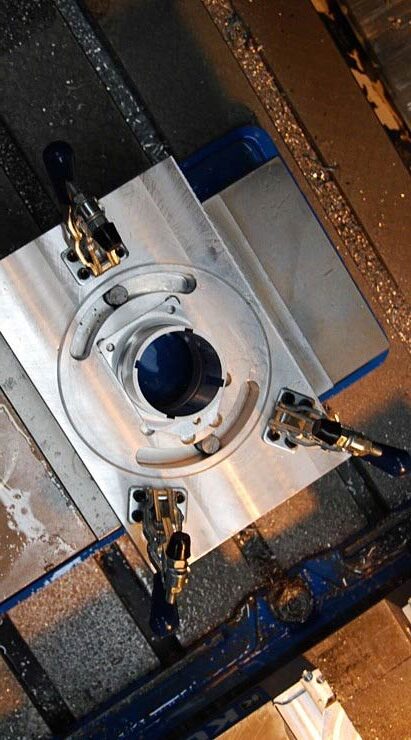
Why Small Bore Keyways Are Difficult
The challenge with small bore internal keyways isn’t the keyway itself — it’s the constraints the bore geometry imposes on every tool that has to fit inside it.
Broaching at small diameters: Push broaches require guide bushings to keep the tool on centerline through the cut. Standard bushings are manufactured in fixed bore sizes, and below certain diameters the bushing options thin out quickly. At very small diameters — under ½” — you may find that no standard bushing exists for your bore size, that the wall thickness of the bushing leaves no room for the broach itself, or that the broach is so slender it flexes and deflects under cutting load. Custom broach tooling for non-standard small bores is expensive, slow to procure, and difficult to justify for short runs.
Angle head milling: Angle heads require the body of the head to fit inside the bore to redirect the cutter 90 degrees. At small bore diameters there’s simply no room — the head can’t enter the bore, so this method is eliminated entirely.
Wire EDM: Geometrically capable of small bore keyways, but slow and expensive per part. For one-off applications in difficult materials this may be the only option — but for any volume or standard material, it’s hard to justify the cost.
Improvised methods: Machinists who need a one-off small bore keyway often resort to lathe-shaping with a ground boring bar tool, hand filing, or drilling and filing — methods that work in a pinch but are slow, skill-dependent, and difficult to hold to tolerance across multiple parts.
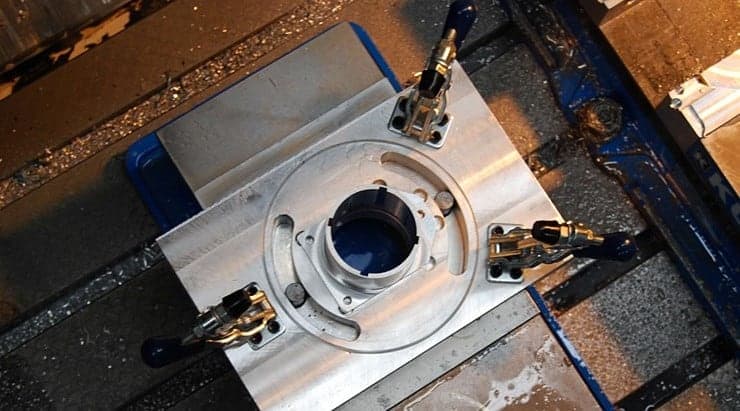
NMT’s keyseat miller: The tool seats inside the bore using the bore wall itself as the guide. At small diameters, the tool body and pilot are manufactured to fit the available space precisely — there’s no clearance problem, no bushing required, and no angle head to worry about. The cutter rotates and mills the keyway in a single pass, the same way it does in a large bore.
Applications That Commonly Require Small Bore Keyways
Small bore internal keyways appear more often than many engineers expect, across a range of industries and part types:
Precision instrument components — small bore hubs, couplings, and shaft adapters in measurement and laboratory equipment where miniature keyways lock components to instrument shafts
Servo and stepper motor couplings — small diameter coupling hubs for servo and stepper motor shafts in automation, robotics, and CNC machine drive systems
Medical device assemblies — small bore drive components in surgical tools, dental equipment, and medical automation where precise torque transmission at small scale is required
Hydraulic and pneumatic components — valve spools, actuator hubs, and small bore fittings where internal keyways secure rotating elements
Aerospace and defense — small diameter actuator components, sensor hubs, and precision linkage assemblies where keyways are specified to tight print tolerances
Watchmaking and precision manufacturing — very small bore keyways in fine mechanical assemblies where conventional broaching tooling simply doesn’t exist at the required size
Replacement and repair work — restoring keyways in worn or damaged small bore components where a custom tool is more economical than sourcing a replacement part
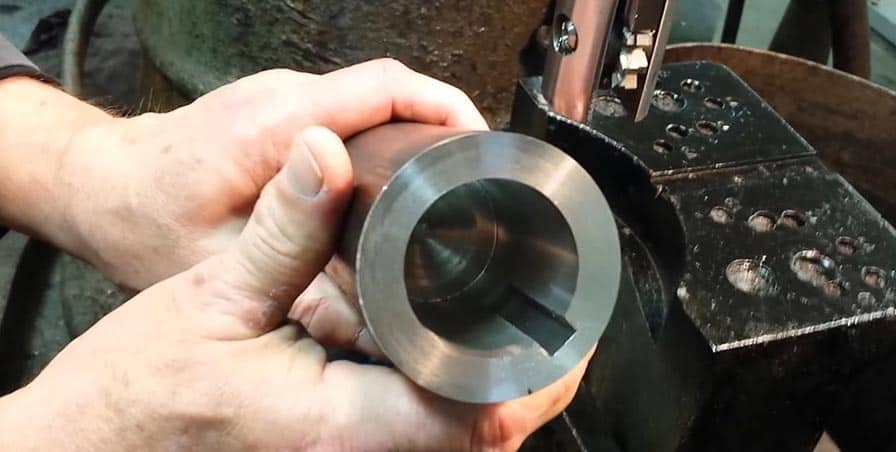
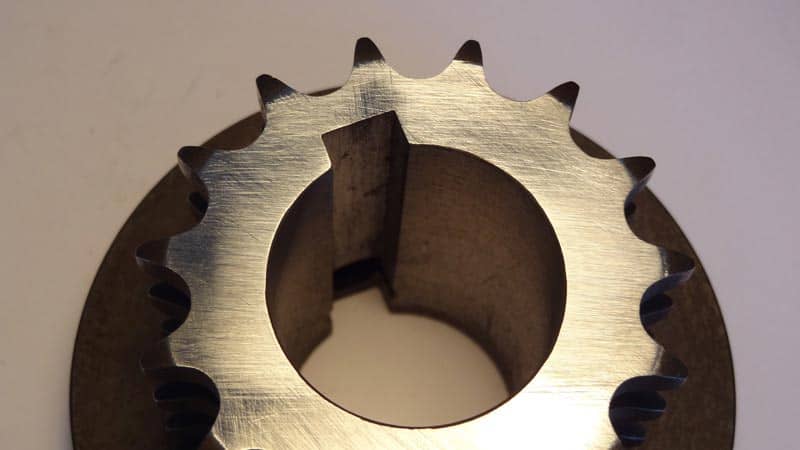
Small Bore Keyseat Miller Capabilities
All tooling is custom-manufactured to your application:
- Minimum bore diameter: Under ½” — contact us with bores as small as 0.439″ and below for feasibility confirmation
- Keyslot widths: 1/16″ and up, scaled to your bore diameter and key standard
- Keyway types: Full depth, blind bore (no relief hole required), through bore
- Tolerances: Within ±0.0002″ on keyslot width
- Materials: Steel, stainless, aluminum, brass, bronze, titanium, and most precision alloys
- Machine compatibility: Manual drill press, manual mill, CNC machining center — the small bore tools are used on the same equipment as larger bore tooling
- Delivery: Custom tooling in 2–3 weeks; contact us to discuss your specific bore diameter before ordering
One important note: at very small bore diameters, feasibility depends on the specific bore size, keyway width, and material combination. If your bore is at or below ½”, contact us with your dimensions before ordering — our engineers will confirm whether a keyseat miller can be designed for your application and what the constraints are.
How to Submit a Small Bore Keyway Application
Small bore applications benefit from a quick conversation before quoting. The most useful information to have ready:
- Bore diameter — as precise as possible, ideally from the part drawing
- Keyslot width and depth — per your print or key standard
- Keyslot length — how deep the keyway needs to go into the bore
- Blind or through bore — whether the keyway terminates inside the bore or exits the other end
- Material — what the part is made of
- Machine available — manual or CNC, and what spindle interface you’re using
The more specific you can be upfront, the faster we can confirm feasibility and quote tooling.
Request a Quote for Your Small Bore Keyway
Call: 513-541-6682 Email: nationalmachinetoolco@gmail.com
National Machine Tool Co. — Cincinnati, OH — Over 100 years manufacturing custom keyseat millers, including the small bore applications nobody else can tool up for.